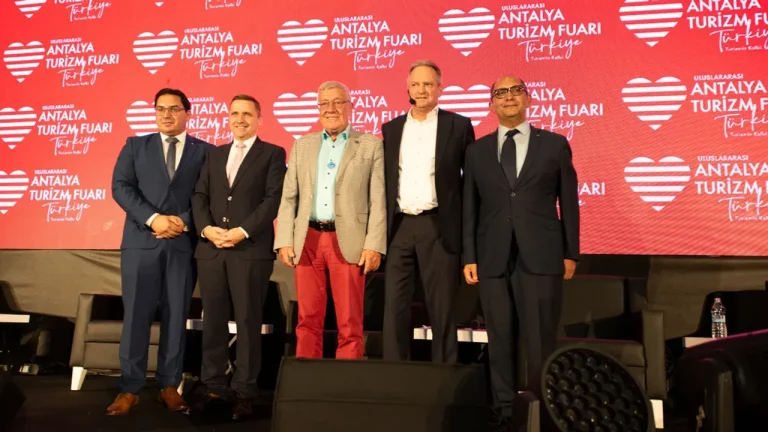
The “German Tourism Industry Meeting” panel, held within the framework of the International Antalya Tourism Fair (ATF25), examined in detail Türkiye’s role in the German market and future-oriented strategies for the tourism sector.
The International Antalya Tourism Fair took place on October 22–23–24, 2025, at the Antalya ANFAŞ International Fair Center. Organized for the seventh time, ATF25 brought together all components of the tourism industry under one roof, hosting a major global gathering. Held with Türkiye İş Bankası as the main sponsor and Kilit Hospitality Group as the main partner, ATF25 stood out with its theme of “Sustainable Hospitality.”
One of the key panels of ATF25 was the “German Tourism Industry Meeting.” The panel brought together Sören Hartmann, President of the German Tourism Industry Association (BTW); Önder Sancarbarlaz, Vice Chairman of the Foreign Affairs Commission of the German Travel Agents Association; Ömer Karaca, CEO of Schmetterling International; Thomas Bösl, CEO of RTK Group; and Kadir Uğur, Chairman of the Board of Bentour Reisen. The speakers exchanged views on the strong tourism relations between Türkiye and Germany and on future strategies. Moderated by Sören Hartmann, the panelists comprehensively discussed Türkiye’s achievements in tourism as well as the challenges it faces.
Sören Hartmann: The Importance of Tourism Relations Between Germany and Türkiye
Opening the panel, moderator Sören Hartmann emphasized Türkiye’s strategic importance for Germany. He stated that tourism relations between Türkiye and Germany are significant not only in numerical terms but also in terms of cultural interaction. Hartmann noted that Türkiye’s growth and development in tourism in recent years have directly influenced his own career:
“Türkiye has always been an important tourism destination for Germany. I am very happy to be here today. The cooperation between Türkiye and Germany sets an important example not only in tourism but also in cultural relations. The growth Türkiye has shown in recent years has directly influenced my career.”
To better illustrate Türkiye’s role in tourism, Hartmann referred to the number of tourists traveling from Germany to Türkiye and the country’s growing tourism market. He underlined that as of 2024, 12 percent of Türkiye’s GDP comes from tourism, which represents a critical contribution to the national economy:
“Last year, 6 million German tourists visited Türkiye. This once again demonstrates Türkiye’s strong appeal as a tourist destination. Especially Istanbul became one of the world’s most visited cities in 2023, which is a clear indicator of Türkiye’s strength in tourism.”
Önder Sancarbarlaz: Türkiye’s Economic Value for Germany
Önder Sancarbarlaz drew attention to the economic dimension of tourism flows from Germany to Türkiye. He emphasized how tourism relations between Germany and Türkiye have deepened over time and highlighted the value Turkish tourism adds to the German economy. Stating that 12 percent of Türkiye’s GDP came from tourism in 2024, Sancarbarlaz noted the sector’s critical contribution:
“Germany’s interest in Türkiye is not only significant in numerical terms but also increases cultural interaction. Germany continues to be Türkiye’s largest tourism market. In 2024, 12 percent of Türkiye’s GDP came from tourism. This represents a very critical contribution to the Turkish economy.”
He added that Türkiye’s growth in tourism plays a major role in strengthening Turkish-German relations and reinforces cultural ties between the two countries.
Ömer Karaca: The Role of Digitalization in Tourism
Ömer Karaca focused on the role of digitalization in tourism and the importance of digital solutions that increase efficiency across the sector. He stated that the high-quality services Türkiye offers can be further strengthened through digital transformation:
“Digitalization in tourism does not only refer to software; it represents a transformation that changes how we do business. We need to accelerate the digitalization process in order to meet customer expectations.”
Karaca emphasized the need to improve digital platforms in a rapidly evolving travel industry and underlined the importance of investing in digital infrastructure to reach broader markets.
Thomas Bösl: Optimistic Expectations for 2026
Thomas Bösl expressed optimism about the future of Turkish tourism. Despite a slight decline in 2025, he stated that Türkiye’s tourism potential remains strong. Sharing his outlook for 2026, Bösl cautioned against excessive price increases:
“2025 was a challenging year. However, Türkiye has always been a very strong destination. I am optimistic about 2026. We need to be careful about pricing, as price increases may cause the loss of certain market segments.”
He also stressed the need for diversification beyond traditional sun-and-beach tourism:
“Türkiye should not be limited only to sun-and-beach holidays. We should also turn toward new areas such as wellness and health tourism. Health tourism, in particular, represents a significant opportunity for Türkiye.”
Kadir Uğur: Investment in the Scandinavian Market and New Opportunities
Kadir Uğur shared insights into investments targeting the Scandinavian market to diversify Turkish tourism. He noted that while interest in Türkiye has declined in some segments, strategic investments can compensate for this trend:
“Our investments in the Scandinavian market offer a strong opportunity to create a powerful market, especially by adopting a tourism approach that is not solely price-oriented. Our agreements with TUI will increase our impact in this area.”
A Hopeful Perspective for the Future
At the end of the panel, speakers expressed optimism regarding the future of Turkish tourism. Sören Hartmann emphasized that Türkiye’s strong position and service quality will further strengthen international cooperation:
“We trust the quality of Türkiye, and we must work together to deliver this quality to an even broader customer base.”
The “German Tourism Industry Meeting” panel, held within the framework of the International Antalya Tourism Fair (ATF25), examined in detail Türkiye’s role in the German market and future-oriented strategies for the tourism sector.
The International Antalya Tourism Fair took place on October 22–23–24, 2025, at the Antalya ANFAŞ International Fair Center. Organized for the seventh time, ATF25 brought together all components of the tourism industry under one roof, hosting a major global gathering. Held with Türkiye İş Bankası as the main sponsor and Kilit Hospitality Group as the main partner, ATF25 stood out with its theme of “Sustainable Hospitality.”
One of the key panels of ATF25 was the “German Tourism Industry Meeting.” The panel brought together Sören Hartmann, President of the German Tourism Industry Association (BTW); Önder Sancarbarlaz, Vice Chairman of the Foreign Affairs Commission of the German Travel Agents Association; Ömer Karaca, CEO of Schmetterling International; Thomas Bösl, CEO of RTK Group; and Kadir Uğur, Chairman of the Board of Bentour Reisen. The speakers exchanged views on the strong tourism relations between Türkiye and Germany and on future strategies. Moderated by Sören Hartmann, the panelists comprehensively discussed Türkiye’s achievements in tourism as well as the challenges it faces.
Sören Hartmann: The Importance of Tourism Relations Between Germany and Türkiye
Opening the panel, moderator Sören Hartmann emphasized Türkiye’s strategic importance for Germany. He stated that tourism relations between Türkiye and Germany are significant not only in numerical terms but also in terms of cultural interaction. Hartmann noted that Türkiye’s growth and development in tourism in recent years have directly influenced his own career:
“Türkiye has always been an important tourism destination for Germany. I am very happy to be here today. The cooperation between Türkiye and Germany sets an important example not only in tourism but also in cultural relations. The growth Türkiye has shown in recent years has directly influenced my career.”
To better illustrate Türkiye’s role in tourism, Hartmann referred to the number of tourists traveling from Germany to Türkiye and the country’s growing tourism market. He underlined that as of 2024, 12 percent of Türkiye’s GDP comes from tourism, which represents a critical contribution to the national economy:
“Last year, 6 million German tourists visited Türkiye. This once again demonstrates Türkiye’s strong appeal as a tourist destination. Especially Istanbul became one of the world’s most visited cities in 2023, which is a clear indicator of Türkiye’s strength in tourism.”
Önder Sancarbarlaz: Türkiye’s Economic Value for Germany
Önder Sancarbarlaz drew attention to the economic dimension of tourism flows from Germany to Türkiye. He emphasized how tourism relations between Germany and Türkiye have deepened over time and highlighted the value Turkish tourism adds to the German economy. Stating that 12 percent of Türkiye’s GDP came from tourism in 2024, Sancarbarlaz noted the sector’s critical contribution:
“Germany’s interest in Türkiye is not only significant in numerical terms but also increases cultural interaction. Germany continues to be Türkiye’s largest tourism market. In 2024, 12 percent of Türkiye’s GDP came from tourism. This represents a very critical contribution to the Turkish economy.”
He added that Türkiye’s growth in tourism plays a major role in strengthening Turkish-German relations and reinforces cultural ties between the two countries.
Ömer Karaca: The Role of Digitalization in Tourism
Ömer Karaca focused on the role of digitalization in tourism and the importance of digital solutions that increase efficiency across the sector. He stated that the high-quality services Türkiye offers can be further strengthened through digital transformation:
“Digitalization in tourism does not only refer to software; it represents a transformation that changes how we do business. We need to accelerate the digitalization process in order to meet customer expectations.”
Karaca emphasized the need to improve digital platforms in a rapidly evolving travel industry and underlined the importance of investing in digital infrastructure to reach broader markets.
Thomas Bösl: Optimistic Expectations for 2026
Thomas Bösl expressed optimism about the future of Turkish tourism. Despite a slight decline in 2025, he stated that Türkiye’s tourism potential remains strong. Sharing his outlook for 2026, Bösl cautioned against excessive price increases:
“2025 was a challenging year. However, Türkiye has always been a very strong destination. I am optimistic about 2026. We need to be careful about pricing, as price increases may cause the loss of certain market segments.”
He also stressed the need for diversification beyond traditional sun-and-beach tourism:
“Türkiye should not be limited only to sun-and-beach holidays. We should also turn toward new areas such as wellness and health tourism. Health tourism, in particular, represents a significant opportunity for Türkiye.”
Kadir Uğur: Investment in the Scandinavian Market and New Opportunities
Kadir Uğur shared insights into investments targeting the Scandinavian market to diversify Turkish tourism. He noted that while interest in Türkiye has declined in some segments, strategic investments can compensate for this trend:
“Our investments in the Scandinavian market offer a strong opportunity to create a powerful market, especially by adopting a tourism approach that is not solely price-oriented. Our agreements with TUI will increase our impact in this area.”
A Hopeful Perspective for the Future
At the end of the panel, speakers expressed optimism regarding the future of Turkish tourism. Sören Hartmann emphasized that Türkiye’s strong position and service quality will further strengthen international cooperation:
“We trust the quality of Türkiye, and we must work together to deliver this quality to an even broader customer base.”